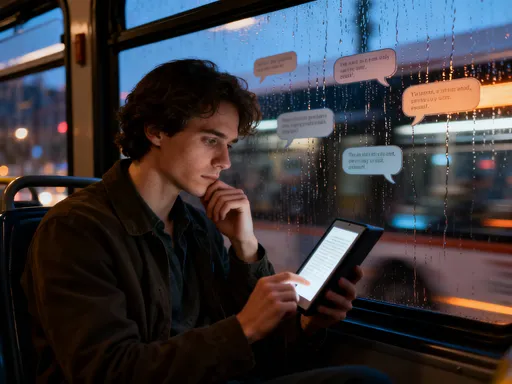
Tired of Missing Out on Great Conversations? E-Readers That Keep You in the Loop
Have you ever felt disconnected from friends because you’re too busy to keep up with books everyone’s talking about? You’re not alone. Between work, family, and daily life, finding time to read—and join meaningful conversations—can feel impossible. But what if your e-reader could do more than just hold books? What if it helped you absorb ideas faster, stay informed, and naturally connect with others? This is not about reading more—it’s about gaining insight efficiently and confidently contributing to the conversations that matter. It’s about turning quiet moments with a device into powerful tools for connection, growth, and belonging.
The Silent Struggle of Falling Behind in Book-Based Conversations
Let’s be honest—how many times have you sat in a coffee shop, scrolling through messages from your book club, seeing excited reactions to a novel you haven’t finished? Or heard coworkers buzzing about a leadership book that’s “changing how they think,” only to nod along quietly because you haven’t cracked it open? That sinking feeling isn’t just about missing a plot twist. It’s deeper. It’s the quiet ache of being left out of something meaningful. You care. You want to be part of the conversation. But life gets in the way. And when everyone else seems to be absorbing great ideas while you’re juggling school pickups and grocery lists, it’s easy to feel like you’re falling behind—not intellectually, but socially.
I remember sitting at a weekend brunch with some longtime friends. They were all talking about a memoir that had moved them to tears. One friend even said it changed how she sees her own mother. I smiled, nodded, sipped my tea. But inside, I felt a little hollow. I hadn’t read it. Not because I didn’t want to, but because I’d been up late the night before helping my daughter with a science project, and the night before that, I was on a conference call for work. The book was on my nightstand, untouched. And in that moment, I realized something: falling behind on reading isn’t just about books. It’s about missing shared emotional experiences. It’s about feeling like you’re on the outside looking in, even among people you love.
This isn’t a failure of interest. It’s a failure of time. And the truth is, most of us aren’t reading less because we don’t care—we’re reading less because the pace of life makes deep reading feel like a luxury. But here’s the good news: you don’t have to choose between being present for your family and being present in conversations that matter. The right tools can help you do both. And that’s where your e-reader comes in—not as a replacement for real connection, but as a bridge to it.
How E-Readers Quietly Boost Your Information Speed
Think about the last time you tried to read a physical book in less-than-ideal lighting. Maybe you were on the couch after dinner, the room dim, your eyes starting to tire. Or maybe you were on a bumpy train ride, struggling to keep the pages steady. How much of that reading session actually stuck with you? Chances are, not all of it. That’s because when your body is working hard to see the words, your brain has less energy to process the meaning. This is where modern e-readers make a quiet but powerful difference. They’re designed to reduce the friction between you and the ideas you want to absorb.
Take the screen, for example. Most e-readers use what’s called e-ink technology. It mimics the look of printed paper, so there’s no glare—even in bright sunlight. That means you can read comfortably on a sunny porch or in a waiting room with harsh overhead lights. No squinting. No eye strain. And because the screen doesn’t emit blue light like a tablet or phone, it’s easier on your eyes, especially at night. I’ve found that I can read for longer stretches without that heavy, tired feeling behind my eyes. And when you can read longer without fatigue, you naturally absorb more.
But it’s not just about comfort. E-readers also let you customize the reading experience in ways that support faster comprehension. You can adjust the font size so the text is easier to read. You can change the spacing between lines to reduce crowding. Some even let you choose from different typefaces, which might sound like a small detail, but if you’ve ever struggled with dense blocks of text, you know how much clarity matters. And then there’s the built-in dictionary. How many times have you come across a word you didn’t know, thought, “I’ll look that up later,” and then never did? With an e-reader, you just tap the word, and the definition pops up instantly. No interruption. No losing your place. Just smooth, continuous reading.
These features don’t make you read faster in a frantic way. They help you read smarter. They remove the little barriers that slow you down—eye strain, confusion, distractions—so your mind can focus on what really matters: understanding and remembering. And when you understand more in less time, you’re not just reading. You’re preparing yourself to contribute, to connect, to be part of the conversation.
Syncing Your Reading with Real-Life Conversations
Here’s a moment I’ll never forget: I was in a group chat with my sister and two cousins, all of us talking about a novel we’d each started. My sister had just quoted a line that made her cry. My cousin said it reminded her of our grandmother. And then it was my turn. I didn’t have to scramble to find the page. I didn’t have to type out the quote from memory. I simply opened my e-reader, went to my highlights, tapped “share,” and sent the passage right into the chat. Within seconds, we were all discussing it—how it made us feel, what it meant, how it connected to our own lives. That moment wasn’t just about technology. It was about connection. And it happened because my e-reader wasn’t just a book holder. It was a conversation starter.
This is one of the most powerful, yet often overlooked, features of modern e-readers: the ability to highlight and share instantly. When you come across a sentence that moves you, challenges you, or makes you laugh, you can save it with a tap. Later, you can review all your highlights in one place—like a personal collection of the most meaningful moments from your reading. And when the time is right, you can share them with just a few clicks. No retyping. No photos of pages. Just clean, easy sharing that keeps the momentum of a conversation going.
I’ve used this feature in book clubs, work meetings, even casual texts with friends. Once, I was preparing for a team discussion about emotional intelligence at work. I’d been reading a book on the topic, and instead of trying to remember key points, I opened my e-reader, pulled up my highlights, and shared three short passages that captured exactly what I wanted to say. It made me feel prepared. It made my contributions thoughtful. And it sparked a real discussion, not just a series of opinions. My colleagues even asked how I kept such great notes. I smiled and said, “My e-reader does most of the work.”
This isn’t about showing off. It’s about showing up. When you can easily capture and share insights, you’re not just a passive reader. You become an active participant in the exchange of ideas. And that shift—from passive to active—changes how you feel in conversations. You’re not waiting for someone else to bring up the topic. You’re ready with something valuable to add. And that confidence? It’s priceless.
Building Knowledge That Feels Natural, Not Forced
Let’s talk about the pressure to “keep up.” It’s easy to fall into the trap of thinking you need to read everything, remember everything, and quote everything perfectly. But real knowledge doesn’t come from cramming. It comes from repeated, meaningful exposure to ideas. It’s about seeing a concept once, thinking about it, coming back to it later, and slowly making it your own. This is where e-readers truly shine—not just as reading devices, but as learning companions.
Imagine this: you’re going to a dinner party, and you know the host loves discussing current events and big ideas. You want to be able to contribute, but you’re not sure what you remember from that book you read months ago. Instead of rereading the whole thing, you open your e-reader and use the search function. Type in a keyword—maybe “resilience” or “creativity”—and instantly, all the passages where you highlighted or bookmarked that idea appear. In less than a minute, you’ve refreshed your memory, found a quote that resonates, and feel ready to join the conversation. No stress. No last-minute panic. Just quiet, confident preparation.
And it doesn’t stop there. Many e-readers sync with note-taking apps like Evernote or Google Keep. That means the quotes you save, the notes you write in the margins, can follow you to your phone, tablet, or computer. I’ve used this when preparing for a presentation, writing a blog post, or even just journaling about what I’ve been learning. It turns your reading into a living, growing part of your thinking. You’re not just collecting information. You’re building a personal knowledge base—one that grows with you over time.
This kind of digital organization doesn’t replace deep reading. It supports it. It helps you return to ideas when they’re most relevant, so they stick better. And because you’re not trying to memorize everything, reading becomes more enjoyable. You can focus on understanding, not performance. You can let the ideas sink in at their own pace. And when the moment comes to speak up, you’re not reciting facts. You’re sharing something that’s truly yours.
Turning Solo Reading into Social Connection
Reading has always been seen as a solitary act. But with today’s e-readers, it’s becoming something more. It’s becoming a shared experience. And not in a forced way—no one’s making you post every page you read. But subtle features are quietly transforming how we connect through books. For example, some e-readers show you which passages other readers have highlighted most. At first, I thought this was a gimmick. But then I started noticing something: when I saw that hundreds of people had underlined a particular sentence, I paid closer attention. I thought, “Why did this resonate with so many?” And that curiosity led me to reflect more deeply on the idea. Sometimes, it even inspired me to text a friend: “I just read this line that so many people highlighted—what do you think it means?”
Then there are reading challenges and progress updates. I joined a 52-week reading challenge last year—not because I needed to prove anything, but because it gave me gentle motivation. And when I shared my progress with a small group of friends, something interesting happened. We started cheering each other on. “You’re halfway through that book? I can’t wait to hear what you think!” “Only five pages left? You’ve got this!” It wasn’t competitive. It was supportive. It turned reading into something we did together, even when we were apart.
And let’s not forget community notes. Some platforms allow you to read anonymous highlights and comments from other readers. I’ll admit, I was hesitant at first. I didn’t want my reading experience to feel crowded. But when I tried it, I found it comforting. Seeing what others found meaningful helped me notice things I might have missed. It was like having a quiet conversation with a room full of thoughtful people, all of us engaging with the same ideas. And sometimes, those digital footprints led to real conversations. “I saw you were reading that book,” a friend said recently. “There was a part about gratitude that I couldn’t stop thinking about. Did you get to that yet?” We ended up talking for over an hour.
This is the magic of modern reading: it starts alone, but it doesn’t have to stay that way. Your e-reader can be the first step in a chain of connection—between you and an idea, between you and other readers, and eventually, between you and the people in your life. It’s not about replacing face-to-face talks. It’s about enriching them with deeper, more thoughtful content.
Making Time for Insight in a Busy Life
I know what you’re thinking: “I don’t have time to read.” And I get it. Your days are full. Your to-do list never ends. But what if reading didn’t have to be another item on the list? What if it could fit into the small spaces you already have? Five minutes while the kids finish breakfast. Ten minutes waiting for the dentist. Fifteen minutes before you turn off the light at night. These moments are easy to dismiss. But they’re also golden opportunities—for learning, for reflection, for growth.
Here’s where e-readers really help. Because they’re lightweight, portable, and always ready, they turn dead time into meaningful time. No need to carry a heavy book. No worry about losing your place. Just open it, and you’re right back where you left off. I keep mine in my bag at all times. When I’m in line at the grocery store, instead of scrolling through social media, I read a few pages. When I’m waiting for the laundry to finish, I pull it out and dive in. These aren’t long sessions. But over time, they add up. And because I’m not trying to “get through” a book, I actually enjoy it more. I’m not rushing. I’m absorbing.
And because e-readers let you adjust the reading pace to your life, you’re not locked into a schedule. Read five pages today. Skip tomorrow. Read twenty the next night. There’s no guilt. No pressure. Just progress, on your terms. I’ve found that this flexibility makes me more consistent. I’m not waiting for the “perfect time” to read—because I’ve learned that any time can be the right time.
The result? I’m not just reading more. I’m thinking more. I’m bringing more depth to my conversations, more calm to my decisions, and more curiosity to my days. And I’m doing it without adding stress. That’s the real win. It’s not about doing more. It’s about getting more from the time you already have.
Your E-Reader: A Quiet Partner in Personal Growth
At the end of the day, your e-reader isn’t just a gadget. It’s a quiet partner in your personal journey. It doesn’t shout for attention. It doesn’t distract with notifications or endless scrolling. It waits patiently, ready to help you grow when you’re ready to listen. And over time, it becomes more than a tool. It becomes a reflection of your curiosity, your values, your desire to keep learning and connecting.
Think about the conversations you’ve had recently. Which ones felt meaningful? Which ones left you feeling closer to someone? Chances are, they weren’t about the weather or what’s on sale at the store. They were about ideas. About experiences. About what matters. And those conversations don’t happen by accident. They happen when we take the time to fill our minds with things worth sharing. Your e-reader helps you do that—efficiently, gently, and consistently.
It’s not about becoming an expert on everything. It’s about feeling confident in your ability to understand, to reflect, and to contribute. It’s about walking into a room and knowing you have something valuable to say—not because you’ve memorized facts, but because you’ve taken the time to let good ideas shape you. And when you feel that way, something shifts. You speak with more clarity. You listen with more presence. You connect with more authenticity.
So if you’ve ever felt left out of a conversation, if you’ve ever wished you had more to say, if you’ve ever wanted to feel more engaged in the world around you—your e-reader might be the quiet ally you didn’t know you needed. It won’t change your life overnight. But over weeks, months, and years, it will help you become the kind of person who shows up—not just in books, but in life—with thoughtfulness, confidence, and heart. And that? That’s a conversation worth having.