Tired of Missing Out on What You Love? These Settings Gave Me Back My Time
How many times have you looked up from your phone and realized hours vanished—again? You didn’t mean to scroll endlessly; you just wanted to check one thing. Meanwhile, your guitar gathers dust, your journal stays blank, and that book you swore to finish? Still on page 12. I felt the same—until I discovered how a few simple notification tweaks could protect my focus and make space for the hobbies I actually love. It wasn’t about willpower. It was about designing my phone to serve *me*.
The Hobbies We Keep Promising Ourselves
Remember that sketchpad you bought last spring? Or the ukulele you picked up during lockdown, convinced this was finally your moment to learn? Maybe it’s gardening, journaling, or finally mastering sourdough. Whatever it is, you’ve probably told yourself, “I’ll do it when I have time.” But here’s the truth: time doesn’t come to us—it’s made. And most of us aren’t running out of hours; we’re running out of attention.
I used to believe I was just too busy. Between managing the house, helping the kids with homework, and keeping up with daily errands, it felt impossible to carve out space for myself. But then I started noticing something. My days weren’t packed with responsibilities—they were fragmented. I’d sit down with good intentions, maybe open my notebook to write a few lines, and within minutes, my phone would buzz. Just a quick glance, I’d tell myself. But that “quick glance” turned into 20 minutes of scrolling through updates, memes, and endless videos. And just like that, my moment was gone.
We carry a quiet sadness about the things we’ve put off—those dreams we label as “someday.” But the weight of those unfulfilled passions isn’t just emotional; it chips away at our sense of identity. When we stop doing the things that light us up, we start to forget who we are outside of our roles. We’re not just moms, caregivers, or homemakers—we’re artists, learners, creators. And when digital noise keeps pulling us away, it doesn’t just steal time. It steals parts of ourselves.
How Notifications Steal More Than Just Seconds
You might think a notification is just a tiny interruption—no big deal, right? But science tells a different story. Every time your phone dings, your brain has to stop what it’s doing, shift focus, process the alert, and then—here’s the hard part—try to return to where you left off. Researchers have found that it can take more than 20 minutes to regain deep concentration after just one disruption. Imagine that happening ten, twenty, even thirty times a day.
Now think about what kinds of activities suffer the most. It’s not checking emails or folding laundry—those are tasks we can pick up and put down easily. It’s the things that need flow: writing a poem, learning a song, painting a watercolor, even reading a novel. These aren’t chores; they’re acts of presence. They ask us to sink in, to be patient, to let our minds wander and create. But when our attention is sliced into tiny pieces by constant pings, we lose the ability to go deep. We become great at skimming, but terrible at savoring.
I remember trying to write a short story last year. I had the idea, the notebook, the quiet afternoon. But every few minutes, my phone lit up—someone liked my photo, a delivery update, a news alert. Each time, I’d look, tell myself I’d just check it quickly, and then struggle to find my train of thought again. By the end of the day, I’d written three sentences. I wasn’t lazy. I wasn’t uninspired. I was simply under siege by distractions I hadn’t even noticed I’d invited in.
The real cost isn’t the five minutes you lose here and there. It’s the slow erosion of your confidence. You start to believe you don’t have the focus, the discipline, the time. But the truth? Your mind is capable. It just needs space to breathe.
Rethinking Your Phone: From Distraction Machine to Life Support Tool
For a long time, I saw my phone as the enemy. It was the reason I couldn’t finish that book, learn that recipe, or stick to my yoga routine. I’d get frustrated, put it in another room, swear I’d use it less—and then, within hours, I’d be back to scrolling. The cycle felt endless. But what changed everything was a simple shift in mindset: my phone isn’t the problem. How I use it is.
Think about it. Your phone helps you stay connected to family, manage appointments, find recipes, listen to music, even track your steps. It’s not inherently bad. The issue is that it’s designed to grab your attention, not protect it. App developers want you to check in often, click often, stay long. But you don’t have to play by their rules. You can reprogram your phone to serve *your* life—not the other way around.
I started asking myself: What do I want my phone to help me do? The answer wasn’t “scroll more” or “check in constantly.” It was “stay connected to what matters—my family, my health, my creativity.” So I began treating my phone like a tool, not a temptation. I stopped seeing notifications as something I had to respond to and started seeing them as choices. Do I need to know this right now? Does this alert bring me closer to my goals or pull me away?
This mindset shift was powerful. Instead of feeling guilty for using my phone, I started feeling in control. I wasn’t cutting myself off from the world. I was choosing which parts of the world got access to my attention—and when. And once I made that mental flip, the practical changes became easy, even natural.
The Three Notification Settings That Changed Everything
If you’re ready to take back your time, you don’t need to delete every app or go off the grid. You just need to make a few smart, simple changes. These three settings transformed my relationship with my phone—and they can do the same for you.
First, **turn off non-essential app notifications**. Go into your phone’s settings and disable alerts for anything that isn’t urgent. That means social media, news apps, shopping sites, and games. Yes, really. You don’t need to know the moment someone comments on your post or when a sale starts. These alerts are designed to create urgency where none exists. I started by turning off notifications for Instagram, Facebook, and Twitter. At first, I worried I’d miss something important. But after a week, I realized: I hadn’t missed a thing. Instead, I’d gained hours of calm.
Second, **use “Do Not Disturb” as your creative shield**. This feature isn’t just for sleeping. You can schedule it to turn on during your hobby time—whether that’s 7 a.m. while the house is quiet or 8 p.m. after dinner. I set mine from 7:00 to 8:30 every evening. During that time, only calls from my family come through. Everything else waits. It’s like putting up a “Do Not Disturb—Creating in Progress” sign on my day. And the best part? I don’t have to rely on willpower. The system does the work for me.
Third, **set up priority-only notifications for the people who matter most**. Your phone allows you to choose who can reach you even when Do Not Disturb is on. I added my husband, my kids, and my mom. That way, if something urgent comes up, I’ll know. But the rest of the world? It can wait. This small change brought me peace. I no longer feel like I’m ignoring people—I’m just choosing when to be available.
These settings didn’t make my phone boring. They made it respectful. It stopped demanding my attention and started supporting my life.
Creating Space for What Lights You Up
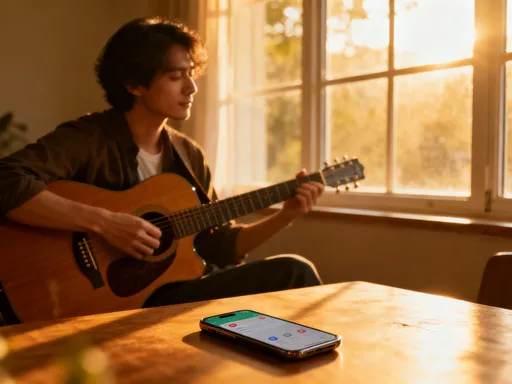
After making these changes, something unexpected happened: I started noticing time. Not big blocks of it—just small, quiet pockets. Ten minutes here. Twenty there. But instead of filling them with scrolling, I began using them to do things I love. I’d pick up my sketchbook and draw a single flower. I’d practice three chords on my ukulele. I’d write one paragraph in my journal.
At first, it felt almost silly. Was this really enough? But then I remembered something a friend once told me: “You don’t need to run a marathon to be a runner. You just need to show up for the jog.” The same is true for creativity. You don’t need hours to be an artist. You just need to show up, again and again, for the thing you love.
I started small. Every morning, after the kids left for school, I’d sit with my coffee and write for ten minutes. No pressure to produce anything brilliant—just to write. Some days, it was three sentences about the weather. Other days, it was a memory from childhood. But over time, those minutes added up. I filled a notebook. Then another. And one day, I realized I was writing not because I “should,” but because I wanted to.
This is the magic of protected time. It doesn’t have to be perfect. It just has to be consistent. When you stop letting every ping pull you away, you create space for something deeper—a connection to yourself, to your curiosity, to your joy.
Building a Habit That Sticks—Without Burnout
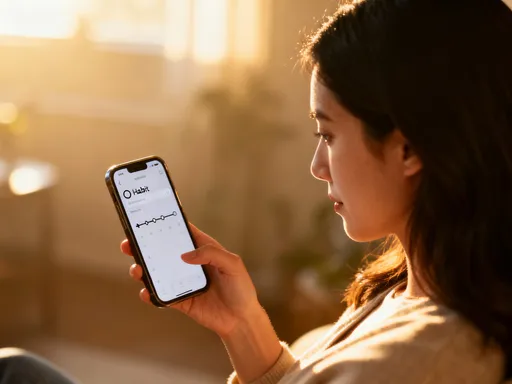
Here’s what no one tells you about starting a new habit: motivation fades. There will be days when you don’t feel like picking up your paintbrush or opening your journal. And that’s okay. The key isn’t intensity—it’s consistency. And the best way to stay consistent? Make it easy, make it kind, and make it part of your rhythm.
I linked my creative time to something I already did every day: drinking my morning coffee. That way, I didn’t have to remember to write. I just had to sit down with my mug. The habit cued the action. You can do the same. Tie your hobby to a daily routine—after breakfast, during your afternoon tea, right before bed. The smaller the gap between the cue and the action, the more likely you are to follow through.
And please, be gentle with yourself. If you miss a day, it’s not failure. It’s life. Progress isn’t linear. Some weeks, you’ll write every day. Others, you might skip a few. But what matters is that you keep coming back. Celebrate the tiny wins: “I showed up.” “I tried.” “I didn’t give up.”
I also learned to start smaller than I thought I needed to. Instead of saying, “I’ll write for 30 minutes,” I’d say, “I’ll write for five.” Often, once I started, I’d keep going. But even if I didn’t, I’d still done something. And over time, those small actions built a new identity: I am someone who writes. I am someone who creates. I am someone who makes space for myself.
Reclaiming Your Attention, One Setting at a Time
At the end of the day, this isn’t just about managing notifications. It’s about reclaiming your life. Every time you silence an unnecessary alert, you’re making a quiet but powerful choice: *this moment matters more*. You’re saying that your creativity, your peace, your joy are worth protecting.
I used to think I needed more hours in the day. But what I really needed was more presence in the hours I already had. By adjusting a few settings, I didn’t just get back time—I got back focus, confidence, and a deeper connection to the things that make me feel alive.
Now, when I pick up my ukulele, I don’t feel guilty for not checking my phone. I feel proud for choosing myself. When I write in my journal, I’m not thinking about the messages waiting for me. I’m thinking about the words flowing from my heart. And when I look up from my sketchbook, I don’t feel like time has vanished. I feel like I’ve truly lived it.
You don’t have to change everything at once. Start with one setting. Turn off one app’s notifications. Try Do Not Disturb for just 30 minutes a day. See how it feels to have a pocket of time that’s truly yours. Because you deserve to do the things you love. Not someday. Not when you “have time.” But now. Right where you are. All it takes is a few small tweaks to your phone—and a big decision to put yourself first.